Save money, extend your vehicle's life, and gain confidence under the hood with these easy do-it-yourself maintenance tasks — no mechanic experience required.
Save Money, Build Confidence
You don't need to be a certified mechanic to take care of your car. In fact, some of the most important maintenance tasks — the ones that keep your engine healthy, your tires gripping the road, and your fluids at safe levels — are simple enough to do in your own driveway on a Saturday morning.
For Upland drivers, the benefits go beyond just saving money. Our local climate — with summer temperatures regularly topping 95°F and dusty conditions from the Santa Ana winds — means your car's fluids, filters, and rubber components work harder than they would in milder areas. Checking these items yourself, more frequently than a shop schedule might suggest, can catch problems before they turn into breakdowns on the 210 freeway or a mountain road.
The DIY Advantage
A basic oil and filter change at a shop runs $50–$80. Doing it yourself costs about $25–$35 in materials. Over a year, with a few simple tasks each month, the average driver can save $300–$500 — and gain the peace of mind that comes from really knowing your vehicle.
This guide covers five straightforward maintenance tasks that anyone can learn, the basic tools you'll need to get started, and — just as importantly — when to recognize that a job is better left to the professionals at a trusted shop like 123 Auto Center.
You don't need a professional garage worth of equipment. Start with these essentials — you can build your tool collection over time as you take on more tasks.
Digital or dial — check pressure monthly
~$8–$15
3/8" drive with metric sizes covers most cars
~$30–$60
Or headlamp — keeps both hands free
~$10–$25
Prevents spills when topping off fluids
~$5–$10
Nitrile or mechanic gloves protect your hands
~$8–$20
For DIY oil changes
~$10–$20
Never rely on just a jack — always use stands
~$60–$120
Flathead & Phillips in multiple sizes
~$12–$25
Always have plenty on hand
~$5–$10
Your car's ultimate reference guide
Free with car
Total starter investment: ~$150–$300. That's less than the cost of two shop oil changes — and these tools will last for years.
These beginner-friendly tasks can save you hundreds and require minimal tools. Each one takes 30 minutes or less.
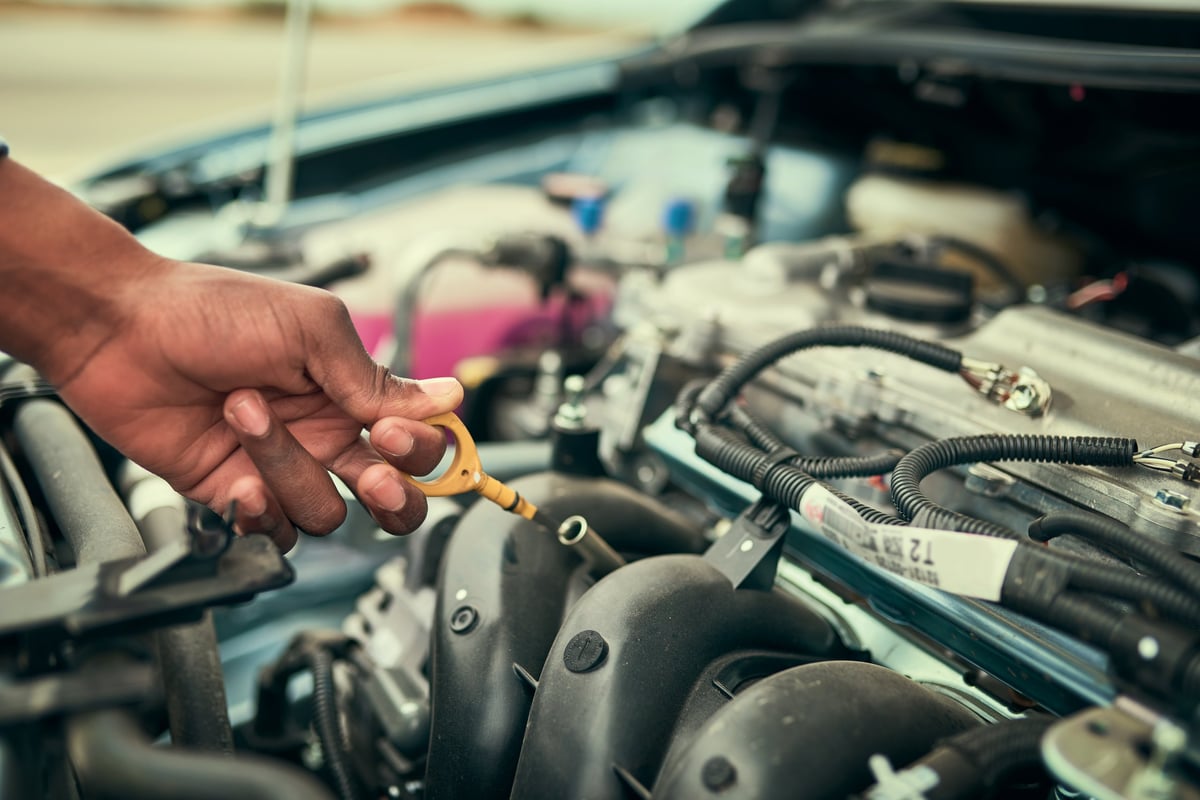
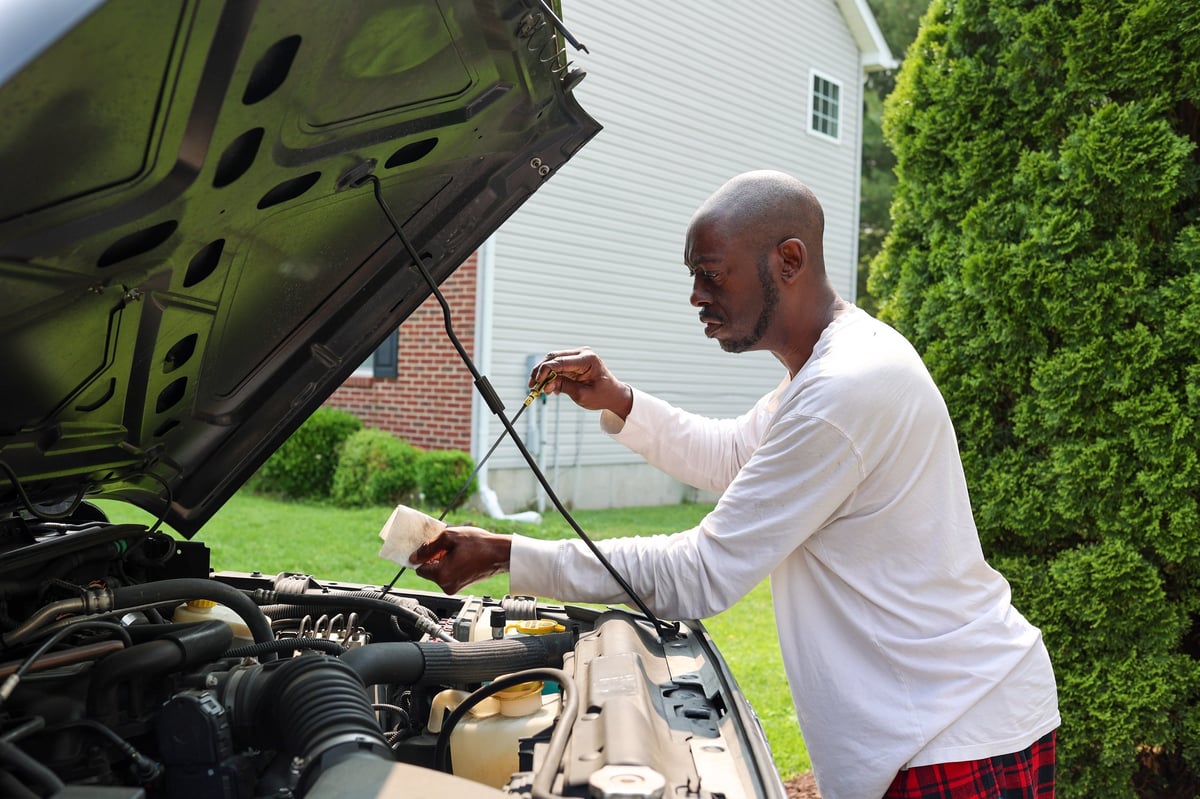
Low or dirty oil is the fastest way to engine damage. Check your oil every month — it takes less than 10 minutes and a quart of oil costs under $10, compared to an engine rebuild at $3,000+.
Properly inflated tires improve gas mileage by up to 3%, last longer, and keep you safer. Check pressure monthly and tread depth every few months — a penny test is all you need.
Streaking, skipping, or squeaking wipers are a safety hazard in rain. Blades cost $15-$30 at any auto parts store, and replacement is tool-free and takes under 10 minutes for most vehicles.
A clogged engine air filter reduces fuel economy and performance. The cabin air filter affects your A/C and air quality. Both cost $10-$25 and are easier to replace than you think — no tools required for most cars.
Brake fluid is your car's most critical safety fluid. Checking it takes just 5 minutes — look at the reservoir level and fluid color. Dark or low fluid means it's time for professional service.
Knowing your limits is just as important as knowing how to DIY. These warning signs mean it's time to bring your vehicle to the experts at 123 Auto Center.
A steady light means get it checked soon. A flashing check engine light signals a severe misfire — pull over immediately and call for a tow. Driving with a flashing light can destroy your catalytic converter, turning a $100 fix into a $1,500+ repair.
Squealing when braking = worn brake pads. Grinding = metal-on-metal — stop driving immediately. Knocking from the engine could mean serious internal damage. Don't ignore strange sounds; they rarely fix themselves.
Red = transmission fluid. Brown/black = oil. Green/orange = coolant. Clear = could be water condensation or brake fluid. Any persistent puddle needs professional diagnosis before it leaves you stranded.
Steering wheel shakes = likely tire balance or alignment. Brake pedal pulses = warped rotors. Whole car vibrates = could be suspension, axles, or drivetrain. Vibration under braking is especially dangerous — have it inspected immediately.
Not sure what that sound means?
Our ASE-certified techs can diagnose it.
Working on your car is rewarding, but safety comes first. Follow these essential precautions every time you pop the hood or crawl underneath.
Never open the radiator cap or work near hot engine components. Wait at least 30 minutes after driving before doing any under-hood work to avoid serious burns.
Always park on a flat, level surface. Engage the parking brake and use wheel chocks ($10 at any auto parts store) to prevent the vehicle from rolling.
A jack lifts — jack stands hold. Never, ever get under a car supported only by a jack. Use jack stands rated for your vehicle's weight, placed on solid frame points.
Safety glasses protect from debris and fluids. Mechanic gloves prevent cuts and chemical exposure. Closed-toe shoes are non-negotiable — never work in sandals or barefoot.
Before any electrical work or when working near moving parts, disconnect the negative battery terminal. This prevents accidental starts, shocks, and short circuits.
Gasoline, oil, and electrical sparks are a dangerous combination. Keep an automotive-rated fire extinguisher within reach and know how to use it before you need it.
If you're ever unsure about a repair or feel unsafe, stop. A tow to 123 Auto Center costs less than an emergency room visit. When in doubt, call us.
Whether you tried the DIY route and hit a snag, or you'd rather leave it to the pros from the start — our ASE-certified technicians are here to keep your car running safely and reliably.
2133 W Foothill Blvd
Upland, CA 91786
Monday – Friday
8:00 AM – 5:00 PM
ASE-Certified
Technicians